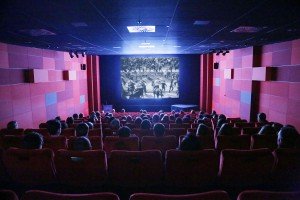
I put press relations and social media for SchulKinoWochen to a practical test: what works? Where do cultural projects face limits and difficulties? From November 2014 to April 2015, I worked as press officer for the SchulKinoWochen Hessen. The central message was clear: children and young people develop media literacy through cinema, while the supporting programme explains the background to filmmaking, for example through conversations with filmmakers. My personal highlight was Nadav Schirman discussing his documentary “The Green Prince”, which traces how the son of a Hamas leader became an informant for Israeli intelligence. Afterwards, the young people asked many questions about Israel, Hamas and how he persuaded the protagonists to speak on camera. I would have loved to join in the questioning.
Press relations and social media: hierarchies and many stakeholders
The combination of different commissioning bodies and stakeholders made press relations challenging in this project. As a major project, SchulKinoWochen is based at the Deutsches Filminstitut in Frankfurt; the project itself belongs to Vision Kino. Alongside other funders, the Hessian Ministry of Science and the Arts and the Hessian Ministry of Education are involved. Every small document therefore had to pass through multiple approval rounds. It is no exaggeration to say that strict hierarchies on all sides meant the text and its direct value for press relations were not always the priority. Hierarchies and status had to be reflected without losing potential readers or diminishing its appeal to journalists. All this demanded great tact in my work. Photo: SchulKinoWochen Hessen At the same time, the project had reached its 9th edition. Existing structures needed revision, key messages careful repackaging and the press mailing list updating. In daily work, I spoke with journalists, wrote copy on different aspects of the project, organised the press conference and opening coverage, and prepared press information for the many local events during the two-week programme in March.
Insufficient cultural funding in Germany
A small downside: as a cultural project, SchulKinoWochen faces severe budget restrictions. This greatly limited marketing possibilities. To give just one example, despite the many teachers and students it could potentially reach, the project was not represented on Social media . So I launched a new Facebook page for SchulKinoWochen Hessen, but it quickly reached a natural limit. The problem is familiar: Facebook prioritises promoted, meaning paid, posts and suggests them to the target audience according to your targeting. Organic, unpaid reach depends on natural growth: slow, indirect and not very effective. Why did I still advocate a Facebook presence?
Three good reasons for Facebook—even without advertising
1. An online business card. A Facebook page now serves a similar purpose to a conventional website for press relations and social media. If you cannot be found, you do not “exist”. If you do not add value through engaging posts, you are not relevant. Creating a page to communicate the activities, programme and atmosphere of SchulKinoWochen, following the motto “content is king”, was therefore essential to increase the project’s visibility and direct visitors to its website. 2. Speaking credibly about media literacy. Facebook is an important information medium for the younger target audience. To appear relevant, especially because the project promotes media literacy, it needs an up-to-date media presence. Unfortunately, many projects, particularly those based in public institutions, lack a social media presence and/or strategy. The content may be interesting, but the tone misses the playful element. Creating a Facebook page therefore also meant deliberately choosing a friendly tone that conveyed both the project’s interesting content and events and the team’s enjoyment. 3. Press relations and social media: we’re playing the long game! Critics may look at the page’s likes and rightly note that they fall far short of reflecting the attendance of over 60,000 teachers and students. Absolutely correct. But as described above, rapid growth in likes cannot be achieved without Facebook marketing. Nevertheless, the time invested in the SchulKinoWochen page will pay off. As the project grows and generates attention each year, the page’s community will also grow annually. Beginnings are hard, but the page has the potential to achieve good reach over the next 2–3 years, provided it continues to be maintained after the project ends in March. Press relations and public relations are long-term activities, and this applies to social media too. So the strategic decision to build a social media page does not depend solely on quickly available likes. With a long-term perspective, discoverability and image also play an important role. This applies not only to SchulKinoWochen, of course, but also to my Lilit Facebook page—which is of course delighted with every new like!
And who knows? Perhaps I will be involved in SchulKinoWochen again next year. I already have plenty of new ideas. Curious for more tips on press relations and social media? Take a look at our best-practice examples from parties‘ election campaigns! Get the best tips on Facebook, Instagram, Snapchat and Twitter. And read about my experiences at the Campaign Camp during the last election campaign. Want to learn in a compact format how to handle press relations effectively yourself? Then get started: take a closer look at our social media programmes in more detail, come to one of our talks or email me about your experiences!