Lilit Insight
#btw17 | Facebook campaigning: what we can learn from parties
Social media is becoming increasingly important in politics too. We took a closer look at how parties present themselves during the Facebook election campaign.
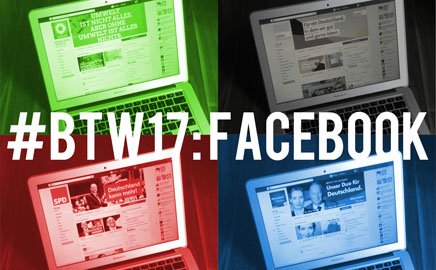
Facebook: almost everyone has it, almost everyone uses it, and its importance as an information source keeps growing. A professional Facebook presence is also essential for companies, parties, associations and clubs, letting them reach audiences where they already spend time. A few months before the federal election, the major parties are stepping up their Facebook campaigns. But how successful are they? How well do they understand the network? What can smaller regional parties, associations or businesses learn from them? We took a closer look at the national parties’ Facebook pages. https://www.lilit-kommunikation.de/wp-content/uploads/2017/07/Parteien-Lilit-Facebook-btw17_neu.jpg
First impressions
Whether CDU, CSU, SPD, FDP, the Greens or Die Linke, established parties all make a credible first impression on Facebook. Content is professionally prepared: texts are clear and concise, spelling and punctuation are correct, and excessive capitals, exclamation marks, emojis and similar flourishes are avoided. Parties post regularly, often on substantive political issues. They also reply to comments, showing openness to dialogue.
SPD impresses with appealing design
A Facebook page needs consistent design and appealing images. The Social Democrats do several things particularly well: the SPD page looks clear and professional. Profile picture, header and posted images work together, and photo quality is good. CDU, for example, still has room to improve, with occasional graphics that clash and poor-quality images. SPD also gets the mix right: campaign messages alternate with quotes, videos and pictures that are sometimes funny, sometimes provocative. https://www.lilit-kommunikation.de/wp-content/uploads/2017/07/Screenshot_SPD-Wahlkampf-Facebook-1.pnghttps://www.lilit-kommunikation.de/wp-content/uploads/2017/07/Linke-1.png Screenshot: Facebook.com/linkspartei
Die Linke: innovative and close to citizens through Facebook video
Facebook offers many ways to present yourself and keeps introducing new tools. The important thing is to use them, be bold and experiment. Most parties do. Die Linke takes viewers straight into the action with a 360° live video from its party congress. Christian Lindner posts live from his balcony, appearing authentic and approachable. Live video also allows immediate interaction: the Greens’ lead candidates, for example, answer questions from comments live on video.
#miasanbayern: CSU with a recognisable identity
When everyone looks professional on Facebook, how do you stand out and show what makes your party special? Surprisingly, CSU offers a useful example. Alongside political posts, it regularly shares beautiful landscapes with captions such as “Wishing you a lovely Sunday with this wonderful view of Gößweinstein in Upper Franconia. #miasanbayern”. This underlines its identity as a locally rooted Bavarian party. Its own hashtag boosts recognition, belonging and interaction. CSU also actively asks users to send beautiful Bavarian pictures, which it then posts. Users become involved and the bond with voters strengthens.https://www.lilit-kommunikation.de/wp-content/uploads/2017/07/CSU.png Screenshot: Facebook.com/CSU https://www.lilit-kommunikation.de/wp-content/uploads/2017/07/CDU.png Screenshot: Facebook.com/CDU
Social media strategy and image must align
When thinking about image and recognition, parties should ask what content suits their identity. You need not, and should not, follow every social media trend. GIFs often work well online, but when CDU replies to comments on serious posts with funny GIFs, it feels odd: playful images simply do not fit the party’s image. There is plenty to learn from established parties’ presence. But what about fringe parties like Alternative für Deutschland? What do they do differently?
AfD on Facebook: “an image garnished with a polemical slogan”
AfD’s page is also consistent and clearly structured. The far-right party regularly posts content with two components:
- A graphic combining a relevant background image and/or politician’s photo, a catchy statement and the party logo
- A text post: a relatively long explanation of the image
Messages are often provocative and sometimes aggressive. The Süddeutsche Zeitung sums it up: “The pattern of an AfD post: an image garnished with a polemical slogan.” AfD deliberately seeks to build an alternative public sphere to media it dislikes, using “negative campaigning”: photomontages and barbed remarks criticise other parties’ politicians. Best known from US elections, this method deliberately casts opponents in a bad light. Studies suggest it does not have the desired effect in Germany: attacks are usually judged negatively and may generate solidarity with the target, the opposite of the attacker’s intention (see Schmücking, 2013). Does the strategy therefore harm AfD? The question remains open: AfD is comparatively successful on Facebook, for example in its like counts. Yet, as I know personally, those include many refugees who want to see what is being said about them. Back to the practical side: presentation and strategy must suit the image. A party outside parliament can afford a polarising strategy; an established centrist party would be more likely to unsettle people with it. https://www.lilit-kommunikation.de/wp-content/uploads/2017/07/Bildschirmfoto-2017-07-21-um-14.07.13.png Screenshot: Facebook.com/alternativefuerde
What can we learn from parties’ Facebook campaigns?
Organisations outside politics, including businesses, associations and clubs, can learn from parties’ Facebook presence. Our Lilit tips:
- Professional design: clear and consistent, not a jumble
- Ensure good image quality and the correct dimensions.
- Build recognition through corporate design, colours and content
- Innovate and use the medium’s possibilities: 360° images, live video, video cover images and temporary features such as the Pride button
- Establish your own hashtags
- Content is king! Original content is more effective than other people’s links
- Be interactive: include user content, such as fans’ own pictures
- Be strategic: adapt posts to your image and audience
Want more Lilit tips?
Facebook is not the only social network relevant to parties. Our other articles explore how they fare on Instagram, Twitter and Snapchat: 1. Learn how to succeed with storytelling on Instagram during election campaigns. 2. Discover the recipe for election campaign success on Twitter. 3. Find out what matters when campaigning on Snapchat. Want to professionalise your own social media strategy? Lilit helps: our social media consulting and seminars show founders, parties and companies how to use social media skilfully and effectively. Get a tailored offer: send an email or call us straight away.
Read more
Related articles.

The next step