Zum Inhalt springen Last Monday, I was a guest at Mainz University: the Career Service had invited me to a panel discussion on entrepreneurship and start-ups. What should you consider when founding a business? Is there an entrepreneurial personality? What if orders fail to arrive? Drawing on my experience with Lilit, but also as a female leadership coach and as a negotiation trainer I had plenty to say about starting a business.
In the atrium of the Alte Mensa, I discussed the topic with Christian Mathey of firma.de, Igor Moos of Videoboost and Victor Anta Munoz of the Gutleut venue in Mainz. Dr. Frank Wittig from SWR moderated the start-up panel.
Last Monday, I was a guest at Mainz University: the Career Service had invited me to a panel discussion on entrepreneurship and start-ups. What should you consider when founding a business? Is there an entrepreneurial personality? What if orders fail to arrive? Drawing on my experience with Lilit, but also as a female leadership coach and as a negotiation trainer I had plenty to say about starting a business.
In the atrium of the Alte Mensa, I discussed the topic with Christian Mathey of firma.de, Igor Moos of Videoboost and Victor Anta Munoz of the Gutleut venue in Mainz. Dr. Frank Wittig from SWR moderated the start-up panel.
My path to my own business
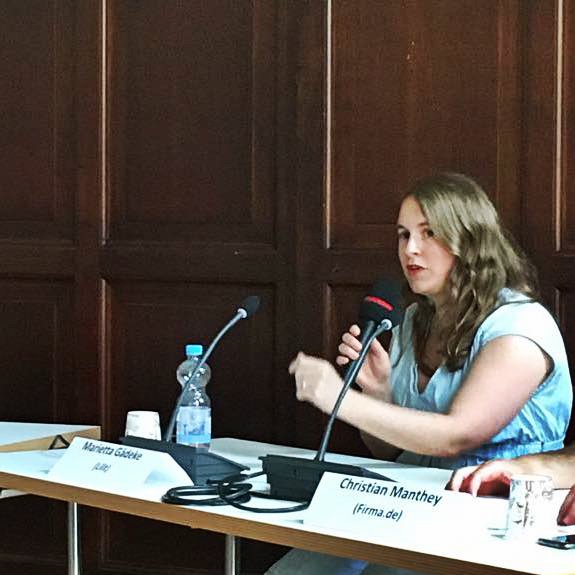
 Naturally, the first question was how we had actually come to launch our start-ups. I more or less “slid” into self-employment by chance: during university, my flatmate asked whether I could take over a rhetoric training session for her. I had already gained experience through my involvement in the university debating club, even becoming German champion.
So why not? That is how I found my first client, the first of many. And yes, that is how simply I laid the foundation for Lilit nine years ago.
Naturally, the first question was how we had actually come to launch our start-ups. I more or less “slid” into self-employment by chance: during university, my flatmate asked whether I could take over a rhetoric training session for her. I had already gained experience through my involvement in the university debating club, even becoming German champion.
So why not? That is how I found my first client, the first of many. And yes, that is how simply I laid the foundation for Lilit nine years ago.
Your start-up and big money
What motivates the leap into self-employment? One audience member was fixated on money and startled us by asking, “When does the six-figure salary come?” Of course, self-employment should pay off. But the other speakers and I agreed: big money should not be the sole reason for building a business. Much more important are thoughts such as “I want to create something new!”, “I want to realize my vision!” and “I want to be my own boss!” Anyone focused only on quick money will fail.
The entrepreneurial personality
What qualities does a founder need to succeed?
- Passion, conviction and enjoyment: these are essential for weathering hard times, at the very start or during the summer lull.
- The ability to handle uncertainty: especially in a start-up’s early days, business goes up and down. Sometimes things go better, sometimes worse. You need to cope without despairing.
- Communication skills: entrepreneurs should communicate well to represent their interests to customers and employees alike. The goal: 360° respect!
- Being a good salesperson: as a founder, you must sell your idea to others, whether defending the business plan to an investor or presenting the company at a trade fair.
Fear is normal, but it is worth it
As a founder, I found the event fascinating! Some audience members were starting their own businesses or planning to, and shared their stories.
Naturally, the students and graduates present also had worries and fears: what if it does not work? What if the money suddenly runs out?
Feeling afraid is completely normal. The path to self-employment has many difficulties and hurdles. But it is worth it! You turn your passion into your profession and determine your own course. For me, having my own business means freedom, and I particularly value that.
By the way: does your start-up need support? For example, with negotiating and selling? Then explore our training services or email Lilit directly!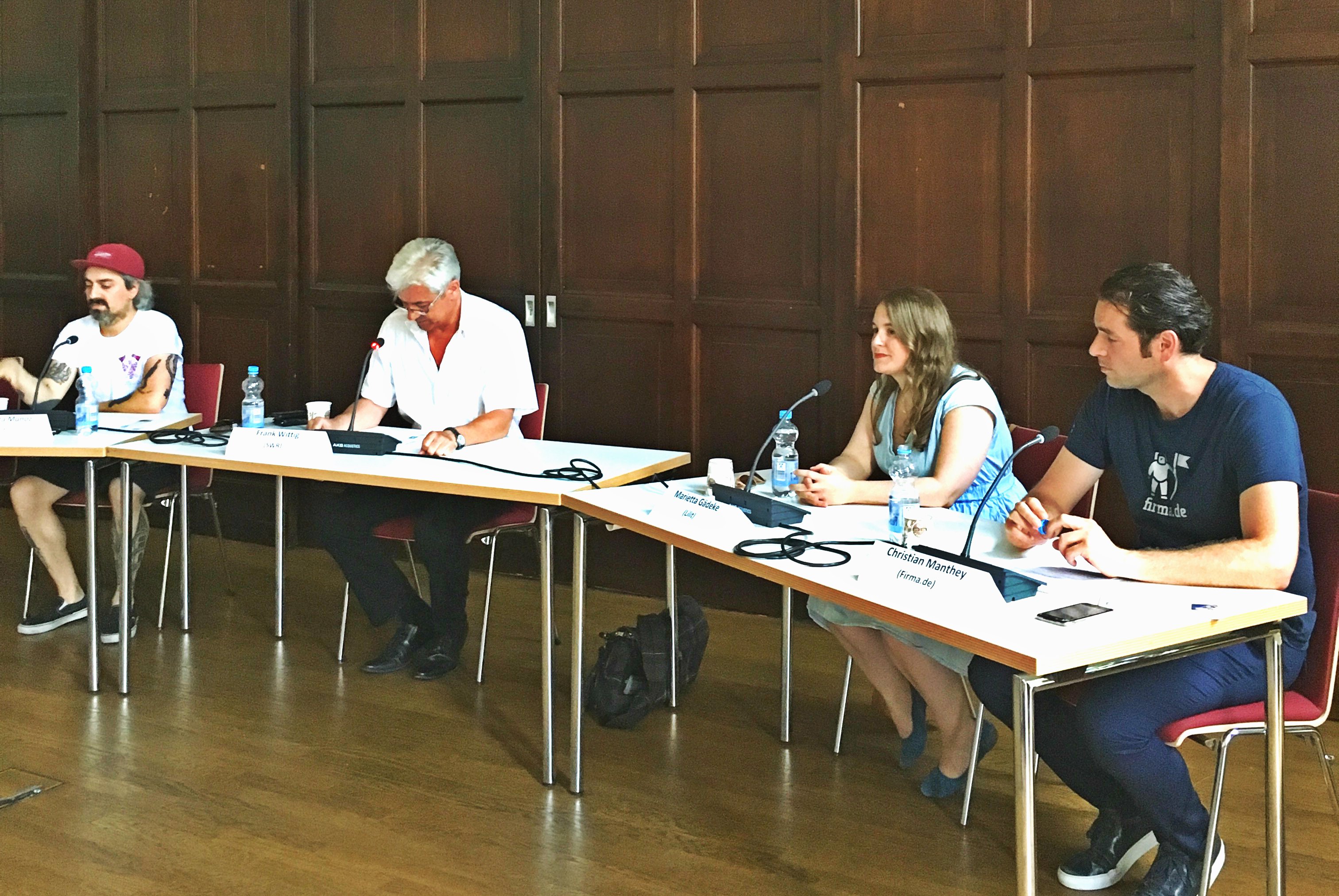 Last Monday, I was a guest at Mainz University: the Career Service had invited me to a panel discussion on entrepreneurship and start-ups. What should you consider when founding a business? Is there an entrepreneurial personality? What if orders fail to arrive? Drawing on my experience with Lilit, but also as a female leadership coach and as a negotiation trainer I had plenty to say about starting a business.
In the atrium of the Alte Mensa, I discussed the topic with Christian Mathey of firma.de, Igor Moos of Videoboost and Victor Anta Munoz of the Gutleut venue in Mainz. Dr. Frank Wittig from SWR moderated the start-up panel.
Last Monday, I was a guest at Mainz University: the Career Service had invited me to a panel discussion on entrepreneurship and start-ups. What should you consider when founding a business? Is there an entrepreneurial personality? What if orders fail to arrive? Drawing on my experience with Lilit, but also as a female leadership coach and as a negotiation trainer I had plenty to say about starting a business.
In the atrium of the Alte Mensa, I discussed the topic with Christian Mathey of firma.de, Igor Moos of Videoboost and Victor Anta Munoz of the Gutleut venue in Mainz. Dr. Frank Wittig from SWR moderated the start-up panel.
 Naturally, the first question was how we had actually come to launch our start-ups. I more or less “slid” into self-employment by chance: during university, my flatmate asked whether I could take over a rhetoric training session for her. I had already gained experience through my involvement in the university debating club, even becoming German champion.
So why not? That is how I found my first client, the first of many. And yes, that is how simply I laid the foundation for Lilit nine years ago.
Naturally, the first question was how we had actually come to launch our start-ups. I more or less “slid” into self-employment by chance: during university, my flatmate asked whether I could take over a rhetoric training session for her. I had already gained experience through my involvement in the university debating club, even becoming German champion.
So why not? That is how I found my first client, the first of many. And yes, that is how simply I laid the foundation for Lilit nine years ago.