Lilit Insight
How is AI changing our communication?
Artificial intelligence is changing how we speak and make decisions. Why I am learning AI as a communication expert—and what really matters.

How is AI changing our communication?
A personal account with conviction
I am a communication trainer. A coach. My work is about clarity, presence and responsibility.
And I am currently learning about artificial intelligence.
Not because I want to become a tech expert, but because I want to understand how communication changes when machines generate language, prepare decisions and influence relationships.
In summer 2025, I began onboarding for the MBAI from Leaders of AI — a comprehensive, multi-month AI programme with a university certificate. Getting started was not effortless for me.
For a long time, I saw AI as a subject for other people: developers, data specialists and strategists behind the scenes. Only the AI training delivered by Bianca Enderlin, an MBAI alumna, made the subject tangible: clear, practical and empowering. Without that first nudge, I would not have dared to take this next step.
Why AI is part of responsibility for me
I train people who want to be more effective, not louder. And I believe effective communication needs an understanding of context. If AI changes that context, we need to take it into account.
Anyone working in HR, leadership or consulting today faces new questions:
- How does AI change our language — and influence our decisions?
- What roles do tools take on — and what responsibility remains ours?
- How do we navigate the tension between automation and human connection?
I wanted not just to discuss these questions, but to put them into practice, understand them and make informed decisions. With depth, conviction and a systematic approach.
Between showroom and learning platform
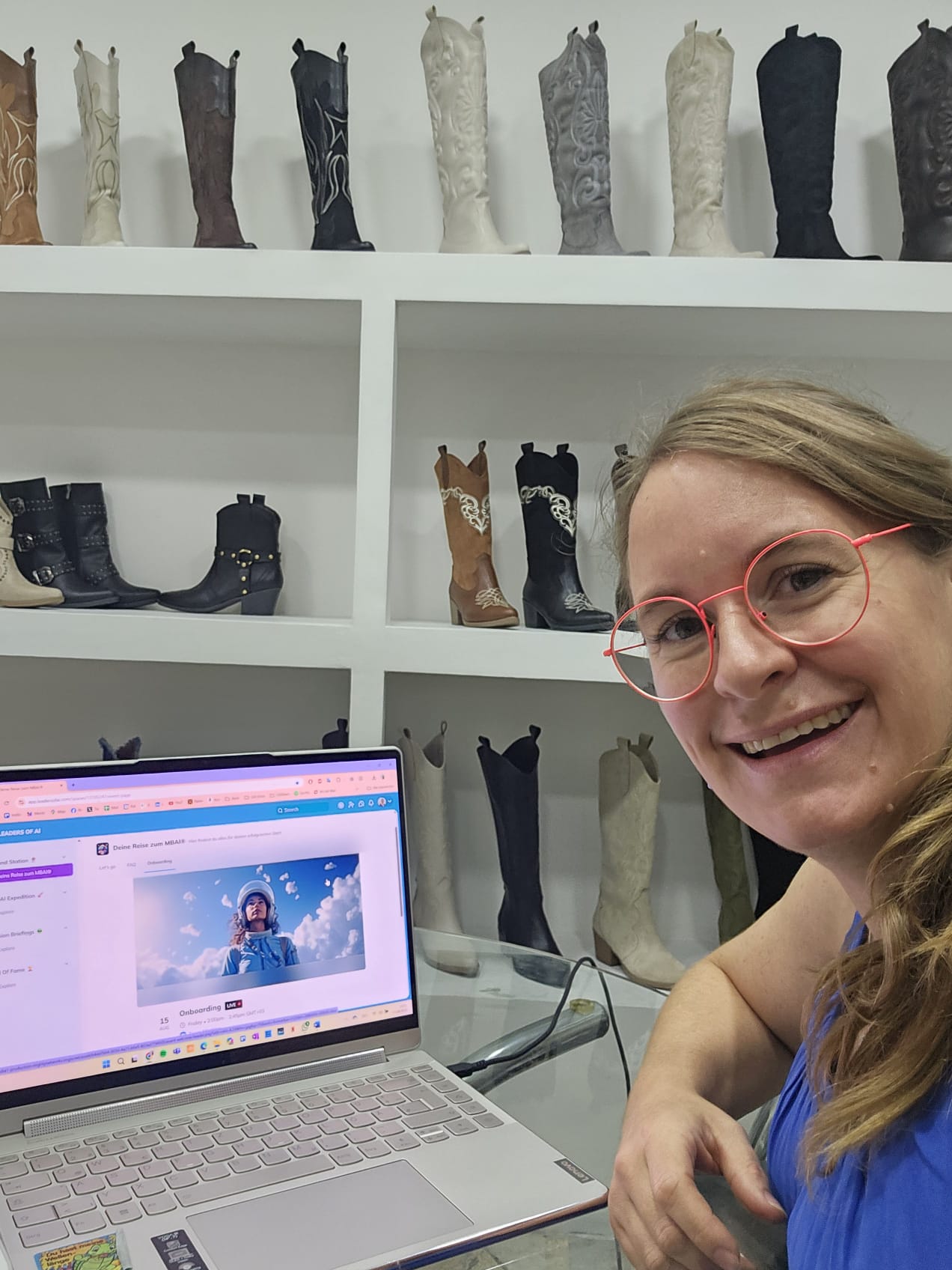
Incidentally, I started the MBAI’s first onboarding module in Izmir — surrounded by knee-high boots and denim boots with rhinestones, buckles and cowboy flair. Our shoe showroom became a place of learning for a few hours. And honestly? It was a perfect fit.
AI does not just happen in laboratories — it happens right in the middle of our lives and work. And that is exactly where I want to be able to understand its place.
AI — a matter of conviction
What have I learned so far? That AI is not a question of tools. It is a question of attitude.
I do not want communication merely to become more efficient, but more conscious, clear and human. For that, we need to know how AI works — and where its limits lie.
I believe anyone in a position of responsibility should engage with AI today. Not to compete with machines, but to recognise opportunities to shape change.
For everyone still hesitating
If you are in a key role — whether in HR, research, leadership or communication — and wonder whether AI is “your thing”: perhaps that is precisely why you are the right person for it.
You do not need blind faith in technology. You need curiosity. An understanding of context. And the courage not to understand everything immediately.
P.S.: Incidentally, Bianca Enderlin is currently launching another AI Summerschool — a compact course for anyone wanting guidance and a quick start with practical action.
What do you think?
How does AI change your view of communication? I look forward to your thoughts in the comments or in a message.
Read more
Related articles.

The next step