Stay clear when questions become difficult
Media training: handle interviews confidently
Realistic interview simulations, message training and direct feedback for confident appearances on camera, on mic and before an audience.
Marietta reviews every request personally and confirms the date and format.
Focus
Knowledge that becomes confident action.
The course combines academically grounded models with realistic exercises. Participants work on their own cases, receive precise feedback and develop solutions they can apply directly.
Learning objectives
What participants develop
Place key messages
Answer critical questions
Use body language consciously
Interviews and the public spotlight For managers, leaders and politicians, a significant part of their work takes place in the media spotlight. Press engagements are demanding: you are expected to be well informed, composed and confident, even when facing critical questions. This spontaneous interaction with journalists is a skill to be learned. A careless remark can quickly become the next day’s headline. That is why, especially when dealing with unpopular or sensitive topics you need excellent preparation through media training. A lot is at stake: your company’s success, the marketing opportunities offered by an interview or the ability to present yourself effectively. If an interview goes wrong, you lose an important opportunity. In serious cases, negative coverage and a resulting drop in sales can even lead to financial losses.
The number one success factor: preparation through media training
Do not let it come to that. Professional media training helps you put your own priorities across effectively and shape public opinion in line with your aims. In Lilit’s media training, the German debating champion, who has appeared on camera herself, shows you the key elements of a strong media appearance:
- Dos and don’ts on camera
- Presenting arguments effectively for the media
- Avoiding journalistic pitfalls
- Getting your messages into the media
- Influencing public opinion
Use research findings from media effects research, film studies and journalism to advance your work. Journalistic communication follows its own logic. Media training covers agenda-setting, news cycles and how to present your story effectively. You immediately apply what you learn in practical exercises and simulated conversations on camera. Individual video feedback reveals opportunities for improvement down to the smallest detail. 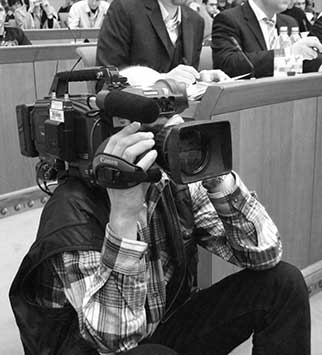 Media training supports confident performance on camera © DCJG 2007. Make the most of Lilit’s media training and contact us to arrange individual training sessions. Would you also like a convincing presence on social media? Explore our programmes for success on social media and present your message in an engaging way. Book now!
Didactic structure
Analyse. Practise. Transfer.
- Clarify the situationGoals, roles and communication dynamics become visible.
- Test strategiesRealistic exercises create space for precise feedback.
- Secure transferConcrete next steps connect the course with daily work.
The next step